- October 11, 2026

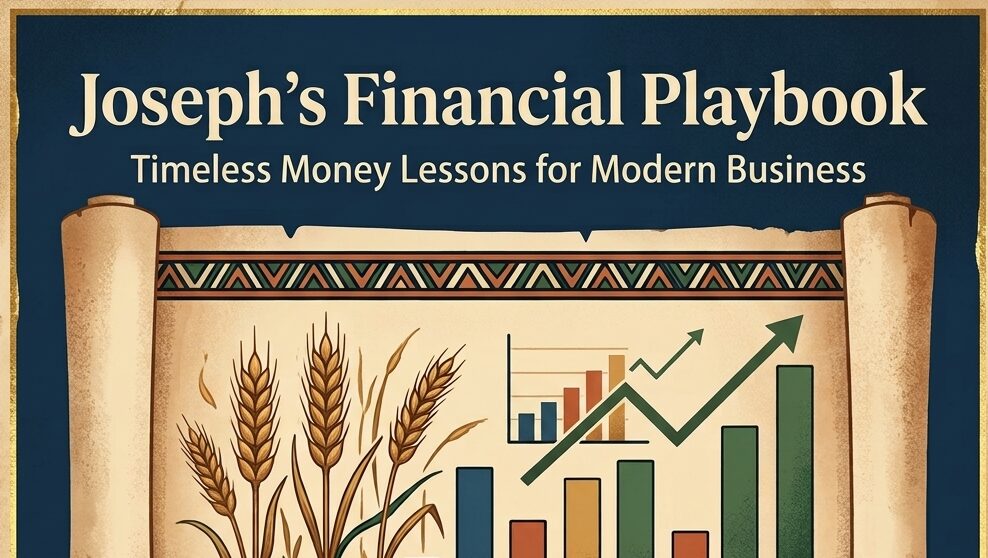
What Joseph Taught the World About Managing Money Through Uncertain Times
Long before terms like “cash flow management” entered the business vocabulary, a young adviser named Joseph, Yusuf in the Quran, gave Egypt’s Pharaoh a fourteen-year economic forecast and a plan that saved a nation from famine[1][2]. His method: save systematically during the years of plenty, preserve capacity rather than exhaust it, know your numbers precisely, prepare before the pressure arrives, and govern with integrity. For Nigerian SME owners navigating 2026’s cautiously improving conditions, easing inflation, a steadier naira, and expanding domestic refining capacity[3][4], this ancient account offers a practical playbook for using today’s relative calm to prepare for tomorrow’s uncertainty.
You can access the podcast version of this article on: The SME Growth Playbook available on Spotify.
What Happened?
Thousands of years before risk mitigation had a name, a young man stood before the most powerful ruler of his age and outlined an economic plan that would save millions of lives. His name was Joseph. In the Quran, he is Yusuf. His story appears in Genesis 41 of the Bible and in Surah Yusuf, chapter 12, of the Quran. Both accounts describe the same essential event: a leader without a plan, an adviser with extraordinary clarity, and a nation that survived a catastrophe it would otherwise not have seen coming.
Pharaoh had experienced a disturbing dream: seven fat, healthy cattle emerging from a river, consumed by seven thin, starved ones; seven full ears of grain, swallowed by seven dry, withered ones. His court advisers could offer no coherent explanation. Joseph, at that point still a prisoner, was summoned[1]. What he offered was not merely an interpretation. He gave a structured economic forecast, a risk assessment, and a concrete action plan in a single conversation: Egypt was entering a fourteen-year cycle, seven years of strong harvests and abundant supply, followed by seven years of severe scarcity, and beyond that, a year of renewed abundance[2].
During the seven good years, Joseph advised, farmers should keep cultivating and leave the harvested grain in its ear rather than threshing it fully, which preserved it far longer against deterioration[2]. Only what was strictly necessary for daily sustenance should be consumed; the rest was to be stockpiled under a structured levy of roughly a fifth of each harvest[1]. He then proposed the governance to execute it: appoint a competent administrator, deploy overseers across every region, and store reserves city by city, close to the fields that produced them, so distribution could be managed efficiently when the lean years came[1]. Pharaoh’s response was to appoint Joseph second in authority over all of Egypt, unable to find anyone more qualified to execute the plan than the man who had devised it[1].
The structure of Joseph’s fourteen-year forecast describes something every serious economist and experienced entrepreneur already understands: markets do not move in straight lines. Periods of strong revenue, high demand, accessible credit, and favourable conditions alternate with periods of contraction, tight margins, and restricted cash flow. This is not a flaw in the system. It is how economic systems have always functioned, from ancient Egypt to modern Lagos. The question Joseph’s story raises is not whether a lean season is coming. It is whether you are using the current season to prepare for it.
Nigerian businesses are currently operating in a period of cautious recovery. Headline inflation has eased for two consecutive months, down to roughly 15.4% in July 2026 from 15.9% in June, even as food inflation, the largest component of the basket, has continued to climb[3]. The naira has shown relative stability, and the Nigerian Economic Summit Group projects the economy growing 4.2% in 2026, accelerating to around 4.5% in the second half[5]. Domestic refining capacity, led by the Dangote refinery now running near full capacity and supplying roughly four-fifths of local fuel demand, is beginning to ease the energy costs that have squeezed SME margins for years[4].
These are the fat years. Not perfectly fat, food prices are still climbing hard, and not without their own pressures, but directionally more favourable than eighteen months ago. Joseph’s lesson is not to celebrate this and assume it is permanent. It is to use this window actively and deliberately to prepare for the seasons that follow.
Five habits, hidden inside an ancient story, translate directly into practice for any Nigerian SME owner:
On the third point specifically: CreditPRO’s online loan calculator exists for exactly this purpose. It is free, takes under two minutes, and lets you model different loan amounts and repayment periods side by side, so you see the real monthly obligation before you sign anything.
Joseph’s forecast did not end with the famine. He told Pharaoh that after the seven hard years, a year of rain and renewed abundance would come[2]. He saw past the crisis to the recovery, and Egypt’s preparation did not just help it survive the lean years; it positioned Egypt as the dominant economic actor in the region once the rain returned, while surrounding nations arrived at the famine with empty hands[1].
The same pattern holds for businesses today. Companies that survive downturns with their key relationships intact, their core operations functional, and their obligations managed are positioned to move quickly when the recovery begins. They often grow faster after a difficult period than before it, because weaker competitors have exited and the market has re-priced in their favour. Preparation during a season like this one is not just insurance against the next downturn; it is a genuine competitive advantage for the recovery after it.
At CreditPRO, one of the most important lessons we see from working with SMEs is that access to finance alone does not make a business stronger. How the business prepares for, structures and deploys that finance matters just as much.
Many business owners approach financing from a position of urgency: “I need money to solve a problem.” But the stronger businesses approach it from a position of preparation: “Here is the opportunity or challenge, here is what it will cost, here is how much capital is required, and here is how the business will generate enough cash flow to repay or sustain the investment.”
That distinction is critical.
A business should not wait until it is under severe cash-flow pressure before understanding its financial position. Business owners should regularly assess their cash reserves, debt obligations, working-capital requirements, repayment capacity, inventory cycle, customer payment patterns and future funding needs. In other words, financial readiness should begin before the need for finance arises.
This is particularly important for Nigerian SMEs operating in an environment where economic conditions can change quickly. A period of relative stability should be used to strengthen the business; not simply to increase spending or take on more debt. The right time to build reserves, improve financial records, strengthen internal controls and secure appropriate funding options is often before the business enters a period of pressure.
At CreditPRO, we believe responsible financing begins with asking the right questions:
Our role, therefore, goes beyond simply providing capital. We believe SMEs need to build the financial capability to use capital productively and responsibly.
For business owners considering a loan, our Generic Loan Calculator[6] can be a useful starting point. It allows businesses to compare different loan amounts and repayment periods and understand the likely monthly repayment, total interest and overall repayment obligation before making a financing decision.
The objective should not simply be to obtain finance. The objective should be to build a business that can absorb capital, deploy it effectively, generate returns and remain resilient when conditions change.
That, perhaps, is the modern business lesson from Joseph’s story: prepare before the pressure, preserve capacity during the good years, and ensure that when opportunities or difficult seasons come, your business is ready to respond.
Joseph was thirty years old when he stood before Pharaoh. He had spent years in a pit, in servitude, and in a prison cell. He had never managed a national economy. What he brought to that moment was clarity of thinking, the courage to give honest counsel even when the forecast was difficult, and a plan specific enough to execute and resilient enough to deliver across fourteen years.
Your business does not need fourteen years of certainty. It needs the same disposition: clear thinking about the cycle you are in, honest assessment of your readiness for the one that follows, and the practical discipline to act on that assessment before the lean years arrive. The tools are available. The wisdom is ancient. Start with the numbers.
You can access the podcast version of this article on: The SME Growth Playbook available on Spotify.
The bracketed numbers in the text above are clickable: Ctrl+click (or tap, on mobile) any [n] marker to jump straight to its full source below.
2026 — https://oilprice.com/Latest–Energy–News/World–News/Dangote–Drives–Nigerias–Domestic–FuelSupply–Above–57–as–Imports–Retreat.html
Disclaimer: This article is written for general information and educational purposes. It does not constitute financial advice. Business owners are encouraged to seek professional financial guidance tailored to their specific circumstances before making any borrowing or investment decisions. CreditPRO Finance Company Limited is a CBNlicensed SME finance company. To explore financing options or model a loan scenario, visit www.creditprosme.com or use the free loan calculator above
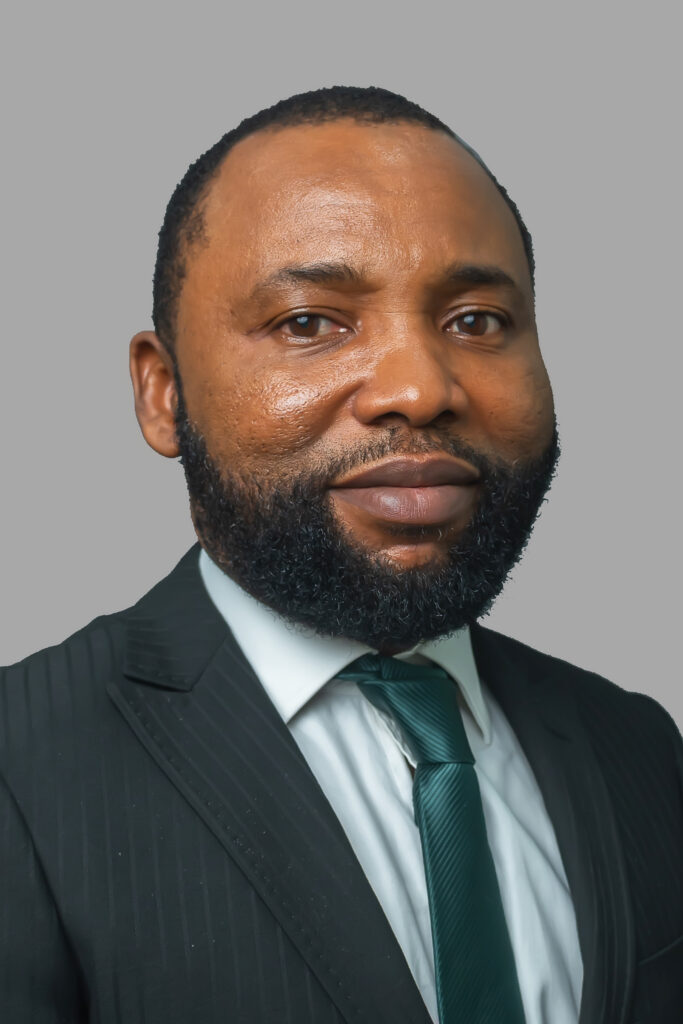
About the Author
Anthony Jiboye is the Head of Growth and Customer Experience at CreditPRO Finance Company Limited. With a proven track record in driving business expansion, customer retention strategies, and service excellence, Anthony leads CreditPRO’s growth initiatives to deliver seamless, customer-centric financial solutions. He is passionate about scaling innovative financial products, enhancing user journeys, and empowering businesses across Nigeria to access reliable funding and growth opportunities.